Rubanda District leaders have visited Kisoro District to benchmark climate-smart initiatives and draw practical lessons on sustainable resource management, environmental conservation, value addition and community livelihood improvement.
The team visited Lake Murehe, where the government has restocked the fishery with approximately 3.8 million fish under the Climate Smart Programme at a reported cost of UGX 2.5 billion.

The visit provided an opportunity for the Rubanda leaders to learn from Kisoro’s experience in implementing climate-smart interventions, particularly in fisheries management, natural resource conservation and improving community livelihoods.
According to the Kisoro Assistant Fisheries Officer, some of the major challenges affecting sustainable fishing activities in the area include poaching and cultivation, which threaten fish breeding grounds and the sustainability of fisheries resources.
He explained that Kisoro District has introduced alternative fishing areas to reduce pressure on the main fishing grounds while encouraging communities to adopt sustainable fishing practices.
The Rubanda team also interacted with Ndabijimana Robert Kizito, Chairperson of the Kisoro Beekeepers Association, who demonstrated how honey can be processed and transformed into different products.
Kizito took the team through various aspects of honey value addition, including processing, packaging and candle making. He emphasized the potential of beekeeping to improve household incomes when farmers move beyond the production and sale of raw honey.
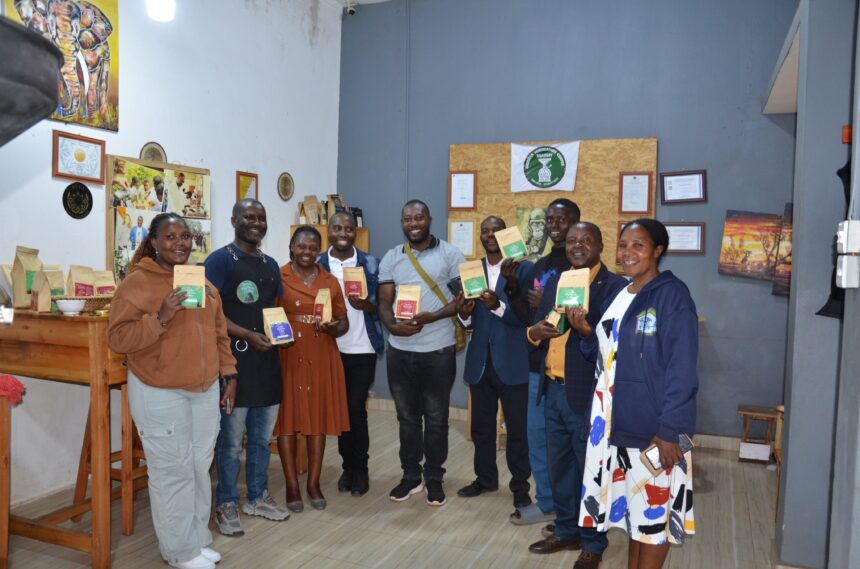
The team also visited Richard Rugaya, CEO and founder of Gorilla Highland Coffee, who shared his experience in coffee production, processing and value addition.
Rugaya explained that his project was launched in 2018 and that the company buys raw coffee from farmers, dries and processes it, grinds it and produces other coffee-related products, including coffee tea.
He said the project also promotes human-wildlife coexistence by economically empowering communities living near wildlife habitats to engage in coffee growing and other sustainable income-generating activities.
To demonstrate the potential of value addition, Rugaya cited indicative price differences, explaining that a coffee seedling may cost about UGX 500, while raw coffee may be sold at approximately UGX 3,500. Clean and processed coffee, he said, can fetch significantly higher prices depending on quality and market conditions.
The Rubanda District Climate Smart Focal Person, Denis Mubangizi, appreciated the different initiatives visited during the benchmarking exercise and pledged to support the adoption of relevant practices in Rubanda.
He said the lessons would particularly inform efforts to promote value addition among farmers, enabling them to derive greater economic benefits from their agricultural produce.
The Rubanda District Production Officer, Dismus Baterana, also pledged to encourage farmers across the district to embrace coffee growing and receive training in value addition.
He said promoting coffee production alongside skills development in processing and value addition could provide farmers with additional opportunities to improve household incomes.
The Secretary for Production in Rubanda District, Nevarine Tusasibwe, said she would use various platforms to publicize and promote successful climate-smart initiatives observed in Kisoro so that communities in Rubanda can learn from them.
She emphasized the importance of sharing practical information on initiatives that can contribute to improved livelihoods and sustainable development in the district.
The benchmarking visit is expected to enable Rubanda District leaders to draw practical lessons from Kisoro’s experiences and apply relevant practices as the district implements its own Climate Smart Programme activities.