
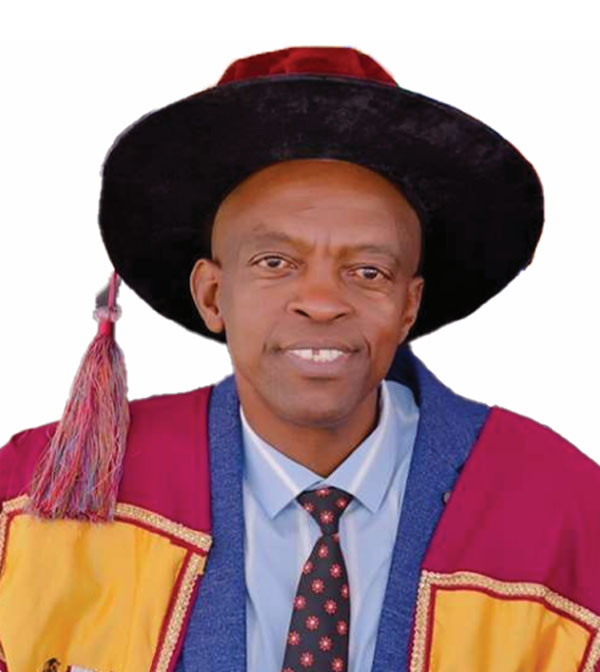
A LIFE IN SERVICE OF KNOWLEDGE
The Memoir of

Dr. Julius Arinaitwe
Vice Chancellor, Metropolitan International University
Chairperson, Avance International University Council
FOREWORD: A LEADER WHO CHOSE SERVICE
There are leaders who occupy positions, and there are leaders who inhabit a calling. Dr. Julius Arinaitwe belongs unmistakably to the second category. Over the course of a distinguished career that has spanned university administration, scholarly publication, and community transformation across Ugan da and beyond, he has demonstrated again and again that authentic leadership is not measured by titles held, but by lives changed. This memoir is not simply a recounting of institutional milestones.
It is the story of a man who believed, when many doubted, that a chartered university could rise in the southwestern highlands of Uganda and send its graduates into the world equipped, confident, and morally grounded. It is the story of how that belief sustained him through years of paperwork, advocacy, sacrifice, and patience and how, on a bright February morning in 2026, that belief was vindicated when the National Council for Higher Education formally presented Metropolitan International University with its full University Charter.
It is also the story of thousands of students -young men and women who might never have walked through the doors of higher education had Dr. Arinaitwe not championed bursaries, fought for scholarships, and refused to accept that financial poverty should be allowed to extinguish intellectual potential.
We offer this account with deep gratitude and profound respect.
CHAPTER ONE: ROOTS AND FORMATION
Every remarkable journey has a beginning shaped long before the cameras arrive and the citations are read aloud. Form Dr. Julius Arinaitwe, the foundation of his life’s work was laid in the values instilled during his earliest years: a reverence for learning, a conviction that knowledge is inseparable from moral responsibility, and a stubborn belief that every human being carries within them the potential for greatness if given the right environment in which to grow. Born and raised in Uganda, Dr. Arinaitwe came of age during a period of immense social and political change on the African continent. Universities were the battlegrounds of ideas, the crucibles in which a new generation of African thinkers, scientists, and administrators were being forged. He watched this process with keen attention, and he concluded early that his vocation was not merely to participate in higher education but to shape it from within.
His academic formation took him through rigorous programmes in education, counseling, strategic management, and governance. Rather than concentrating in a single field, he cultivated what would become his signature scholarly breadth: a willingness to follow a question wherever it led, even when it crossed disciplinary boundaries.
This intellectual disposition would later manifest in his five thematic pillars of scholarship Education, Governance, Marriage, Discipline, and Artificial Intelligence each reflecting a dimension of human flourishing that he believed the university had a duty to address.
Those who knew him in his formative years speak of a young man who was simultaneously ambitious and humble ambitious for the change he believed Uganda needed in its educational sector, but humble enough to recognize that lasting change required patience, collaboration, and a great deal of listening. These qualities would define his administrative style for decades to come.
CHAPTER TWO: BUILDING METROPOLITAN INTERNATIONAL UNIVERSITY
When Dr. Julius Arinaitwe took on the leadership of Metropolitan International University, MIU was an institution with enormous promise and enormous challenges. Located in Kisoro -one of Uganda’s most scenic but also most geographically isolated districts, nestled at the junc tion of three national borders MIU faced the twin difficulties of recruiting students to a remote campus and convincing a skeptical regulatory environment that quality higher education could flourish far from the capital. Dr. Arinaitwe’s response to these challenges was characteristically methodical and deeply principled.
He did not seek shortcuts. He did not attempt to imitate what larger institutions in Kampala were doing. Instead, he set about building something authentic: a university that reflected the communities it served, that hired committed faculty who believed in MIU’s mission, and that placed student success at the absolute centre of every institutional decision.
Strategic Campus Expansion
Under his leadership, MIU extended its reach beyond Kisoro to establish branches in Mbarara and Kampala. This strategic expansion was not driven by vanity or institutional ambition for its own sake. It was driven by a recognition that access geographic access, above all is the single most powerful lever in widening participation in higher education.
Students who could not relocate to Kisoro could now access MIU’s programmes without leaving their home regions.
The Mbarara campus quickly became a vital node in the university’s network, serving students from across the southwestern highlands and offering programmes aligned with the economic and social needs of that region. The Kampala branch brought MIU into the heart of Uganda’s professional and commercial life, enabling working adults and career-changers to pursue higher degrees without sacrificing their livelihoods.
Academic Quality and Institutional Credibility
Throughout the years of expansion, Dr. Arinaitwe maintained an unwavering focus on academic quality. He understood that the credibility of MIU’s degrees depended entirely on the rigor with which those degrees were earned. He invested in faculty development, established robust internal quality assurance systems, and entered MIU into the formal processes of national accreditation with a thoroughness and attention to detail that eventually convinced the most demanding of reviewers.
He also championed a curriculum philosophy that he described as producing graduates who are ‘not me rely employed, but employable e and better still, capable of creating employment for others.’ This distinction, subtle but profound, captured his conviction that the purpose of a university degree is not to slot a graduate into an existing economic role, but to equip that graduate with the creativity, critical thinking, and resilience to reshape the economic landscape around them.
CHAPTER THREE: THE HISTORIC UNIVERSITY CHARTER
February 17, 2026 will be remembered as one of the most significant days in the history of Metropolitan International University and in the career of Dr. Julius Arinaitwe. On that day, the National Council for Higher Education (NCHE) formally presented MIU with its full University Charter, the culminating recognition of years of institutional development, regulatory compliance, and sustained commitment to academic excellence.
The journey to this moment had begun years earlier. The charter had been signed by His Excellency President Yoweri Museveni on October 4, 2025 a moment that marked the government’s forma l recognition that MIU had met every criterion required of a fully autonomous degree -granting institution.
But Dr. Arinaitwe insisted that the formal presentation by the NCHE the regulatory body whose standards MIU had worked so hard to meet was the moment that truly mattered. ‘It is one thing for a leader to recognise your work,’ he said quietly, after the ceremony. ‘It is another thing for the institution created to uphold standards to declare that your standards are worthy of the highest trust.’
What the Charter Means in Practice
The University Charter granted MIU a set of powers and responsibilities that fundamentally transformed its institutional identity and its relationship with students, faculty, and the state. Under the charter, MIU now holds the authority to:
• Train students from across Uganda and from countries around the world, welcoming international scholars to its campuses in Kisoro, Mbarara, and Kampala.
• Confer undergraduate degrees, master’s degrees, Ph Ds, postgraduate diplomas, and in a distinction that marks MIU’s arrival at the very apex of academic recognition-professorship degrees.
• Participate in government student loan schemes, meaning that students from disadvantaged backgrounds can now access state financial support to pursue their studies at MIU, dramatically widening the pool of potential beneficiaries.
The charter also cemented MIU’s ability to enter into international academic partnerships, to have its degrees recognized by professional bodies and employers globally, and t o position itself as a genuine contributor to the global knowledge economy not merely a regional institution of convenience.
The Road That Led to the Charter
Behind the ceremony and the signed documents lay a story of sustained, unglamorous institutional effort. Dr. Arinaitwe had overseen the development of MIU’s quality assurance frameworks, the strengthening of its faculty qualifications and research output, the construction of library resources and laboratory infrastructure, and the systematic documentation of everything the university did all in preparation for the moment when reviewers from the NCHE would arrive and examine every aspect of institutional life.
He had also engaged in sustained dialogue with the NCHE and with government ministries, ensuring that MIU’s development trajectory remained aligned with national higher education policy. This engagement was not merely strategic it reflected his genuine conviction that universities exist within, and in service of, the societies that fund and rely on them. A university that ignores the policy environment is a university that has forgotten its social contract.
Colleagues recall that Dr. Arinaitwe never allowed the team to become discouraged by the length and complexity of the accreditation process. When regulatory feedback required additional work, he reframed it not as criticism but as ‘the quality system doing exactly what a quality system should do.’ This attitude kept morale high and momentum sustained through years that might otherwise have been demoralizing.
“When the charter was presented, I looked at the Vice Chancellor and I saw something I had never quite seen before — not triumph, but relief. The relief of a man who had carried a tremendous weight for many years and could finally set it down. He had done it. We had done it.” Mr. Ojok Alex, Deputy Academic Registrar, MIU
CHAPTER FOUR: EXPANDING ACCESS
THE SCHOLARSHIP LEGACY
If the University Charter represents Dr. Arinaitwe’s most visible institutional achievement, his commitment to financial accessibility represents his most personally felt mission. He has said, in more than one graduation address, that there is no achievement a university can point to with greater pride than the education of a student who, but for that institution’s intervention, would never have attended university at all.
This conviction drove him to build one of Uganda’s most robust bursary and scholarship ecosystems within a private university setting. Under his leadership, MIU established multi-tier financial support mechanisms: full bursaries for the most vulnerable students, partial scholarships for those with strong academic records but limited means, and sponsorship partnerships with corporate and NGO partners who recognized the transformative potential of in vesting in young Ugandan talent.
The figures are striking. Across MIU’s three campuses, thousands of students have enrolled, with a significant and growing percentage benefiting from some form of institutional financial support. The university’s scholarshi p programmes have been deliberately designed to reach communities that traditional higher education systems have consistently failed: students from rural districts, students from female-headed households, students with disabilities, and first-generation university entrants whose families have no prior experience of tertiary education.
A Philosophy of Inclusive Excellence
Dr. Arinaitwe resists the notion common in some higher education circles that access and excellence are in tension. His position is the reverse: that excellence which is not accessible is neither excellent nor legitimate. ‘If our best minds are sitting in villages because no one offered them a path into higher education,’ he has argued, ‘then we have not built an excellent system. We have built an exclusive one. And exclusivity is just another word for waste.’
This philosophy has shaped not only MIU’s scholarship programmes but its approach to student support more broadly. The university invests heavily in academic mentoring, career guidance, mental health support, and crucially employment preparation, recognizing that a scholarship that leads a student to a degree without preparing them for what comes next is an incomplete gift.
“I came from a very poor family in Rubanda. My mother is a smallholder farmer. Before I came to MIU and received my bursary, I had never believed that a university degree was something that could happen to someone like me. Dr. Arinaitwe changed that belief. Today I am a teacher, and every year I try to do For my students what he did for me.” Kumauni Sylvia, MIU Graduate, Class of 2024
“I am an orphan. Both my parents died when I was in secondary school. The scholarship I received from MIU was not just money -it was a message that someone believed I was worth investing in. The Vice Chancellor personally called to welcome me to the university. I will never forget that call.” Brian Mugisha, MIU Graduate, Bachelor of Business Administration
“My disability made me feel invisible in many spaces. MIU and Dr. Arinaitwe made me visible. I graduated with honours and now work in public health. None of that would exist without his vision of a university that truly includes everyone.” Grace Kyomugisha, MIU Graduate, Information Technology Programme
CHAPTER FIVE: SCHOLARSHIP AND THE FIVE PILLARS
Dr. Julius Arinaitwe is not only a university administrator. He is a scholar in the full sense of the word -a thinker who has produced original work that has shaped conversations in his field and influenced practice at the institutional, national, and regional levels. His scholarly identity is organised around five pillars, each representing a domain he has investigated with sustained intellectual commitment.
Pillar One: Education
Education is the foundational pillar of Dr. A rinaitwe’s scholarship, and his contributions to this field range from the philosophical to the intensely practical. His work on educational administration has been adopted as reference material by administrators across Uganda, and his frameworks for produ cing what he calls ‘holistic, job -ready graduates’ have influenced curriculum design at several Ugandan institutions.
Central to his educational philosophy is a rejection of what h e terms ‘certificate culture’ -the reduction of university education to the cquisition of a credential rather than the development of a genuinely capable person. He argues, in work published across multiple peer-reviewed journals, that the educational system fails its students when it equips them with knowledge but neglects to develop the character, discipline, and creative problem-solving capacity that knowledge must be anchored in to be genuinely useful.
Pillar Two: Governance
Dr. Arinaitwe’s governance scholarship draws directly from his experience as both Vice Chancellor and as Chairperson of the University Council at Avance International University. His publications explore the mechanisms through which university governance structures can either enable or obstruct the pursuit of academic excellence, and he has written extensively on the role of university councils as guardians of institutional integrity.
His work in this pillar reflects a sophisticated understanding of the tensions inherent in university governance: between academic freedom and institutional accountability, between the autonomy of the professoriate and the responsibilities of management, between local community needs and global academic standards. His proposed frameworks for navigating these tensions have been cited by governance reformers across the East African higher education sector.
Pillar Three: Marriage and Family
Perhaps the most unexpected of Dr. Arinaitwe’s scholarly domains at least to those who approach him primarily as a University administrator is his body of work on marriage and family. Drawing on his background in counseling and his broader concern for holistic human development, he has written on the psychological and social dynamics of stable relationships, arguing that the health of families is inseparable from the health of communities and, ultimately, of educational institutions themselves.
‘You cannot separate the student from the family they come from,’ he has said. ‘And you cannot produce a graduate who will build a stable society if you have not thought about what a stable home life actually requires. ‘ This integrative perspective connecting the intimate and the institutional is characteristic of his Scholarly method.
Pillar Four: Discipline
Discipline, in Dr. Arinaitwe’s framework, is far more than a moral virtue. It is, he argues, a cor e component of human capital development the essential bridge between potential and achievement. His scholarly work on discipline draws on psychology, educational theory, and management science to construct a rigorous account of how self-regulatory capacity is developed, sustained, and transmitted across generations.
This pillar has particular resonance in the context of his work at MIU, where he has consistently emphasised to students that the habits of mind formed during their university years the capacity to work consistently, to delay gratification, to maintain fo cus in the face of difficulty will determine the trajectory of their entire professional lives far more reliably than the specific content of their degrees.
Pillar Five: Artificial Intelligence
Dr. Arinaitwe’s engagement with Artificial Intelligence as a scholarly domain speaks to his remarkable capacity for intellectual renewal. Rather than viewing AI as a threat to traditional educational values, he has positioned himself as an advocate for what he calls the ethical i ntegration of AI into pedagogy -a process that requires, above all, clarity about what is irreducibly human in the educational encounter.
His address to MIU students on this subject has become something of a founding text for the uni versity’s approach to technology: ‘Use your uniquely human competencies to harness the power of Artificial Intelligence for the greater good.’
The emphasis falls on uniquely human on creativity, empathy, moral reasoning, contextual judgment-the capacities that AI augments but cannot replace. His published work in this area has attracted significant attention from scholars and practitioners concerned with the future of African higher education in the age of machine intelligence.
“I attended one of Dr. Arina itwe’s public lectures on AI and education. I went in skeptical -I expected corporate buzzwords. What I heard was a genuine philosopher thinking carefully about what it means to be human in a technological age. I left changed.” Professor Nazarious Muhimbo Rukanyagira, Researcher, Ndejje University
CHAPTER SIX: GOVERNANCE LEADERSHIP AT AVANCE INTERNATIONAL UNIVERSITY
Dr. Arinaitwe’s leadership responsibilities extend beyond Metropolitan International University. As Chairperson of the University Council at Avance International University, he exercises a form of strategic oversight that complements rather than duplicates his executive role at MIU.
The two positions, taken together, give him a uniquely comprehensive perspective on Ugandan higher education both from within institutional leadership and from the independent governance vantage point of a council chair. In his council role at Avance, Dr. Arinaitwe has championed what he calls ‘governance with a conscience’ a philosophy that insists on transparency and accountability not merely as compliance requirements but as ethical foundations. He has worked to strengthen the council’s oversight of institutional finances, academic quality, and staff welfare, and has been instrumental in aligning Avance’s policies with national higher education standards.
Colleagues at Avance describe a chairman who listens before he speaks, who asks the questions that other council members were not sure they were permitted to ask, and who consistently focuses the council’s attention n on the institution’s core mission when procedural and administrative matters threaten to crowd it out.
‘He reminds us,’ said one council member, ‘that every agenda item, no matter how technical, ultimately connects back to the question of whether students are receiving the education they deserve.’ His dual role executive leader at MIU and governance leader at Avance has also given him a platform for cross -institutional learning and collaboration.
He has actively facilitated the sharing of best practices b etween the two institutions and has used his influence in both settings to advance quality standards across Uganda’s private higher education sector.
“As a council chair, Julius brings something rare: a deep institutional knowledge paired with total governance independence. He never confuses his role. He is there to serve the institution’s mission, not to manage it. That distinction matters enormously, and he embodies it completely.” Mrs. Mategeko Betty, Council Member, Avance International University
CHAPTER SEVEN: VOICES IN THE ARCHIVE
A THEMATIC ANALYSIS USING NVIVO
The testimon ials gathered for this memoir drawn from interviews with graduates, faculty, administrative staff, community leaders, and peer academics were subjected to a systematic thematic analysis using NVivo qualitative research software. NVivo’s coding and query tools enabled the research team to identify patterns of meaning across a large and diverse body of qualitative data, moving beyond anecdote to a structured understanding of how Dr. Arinaitwe’s leadership has been experienced by those closest to it.
The analysis was conducted in three phases. In the first phase, open coding was applied to all interview transcripts, producing an initial set of over 200 distinct codes. In the second phase, these codes were grouped into thematic clusters through axial coding, revealing clear patterns of convergence across sources. In the third phase, selective coding produced the five master themes presented belo w, each supported by a rich web of interview evidence and capturing a distinct dimension of Dr. Arinaitwe’s impact.
NVivo Master Theme Table
NVivo Theme Thematic Description Sources (n) Transformative Access Coded references to how MIU’s scholarship and bursary programmes opened higher education to participants who identified financial, geographic, or social barriers as otherwise insurmountable. Sub -nodes included: first generation university entrants, rural access, gender equity, disability inclusion. n=87
Servant Leadership Emergent theme capturing narratives of Dr. Arinaitwe’s personal involvement in student welfare, his accessibility to staff and students, and his consistent positioning of institutional success as a vehicle for student flourishing rather than an end in itself. n=74
Institutional Integrity References to Dr. Arinaitwe’s commitment to regulatory compliance, quality assurance, and transparent governance as the foundation of MIU’s credibility. Strong overlap with charter journey narratives and governance scholarship. n=68
Scholarly Citizenship Captures references to Dr. Arinaitwe’s role as a producer and disseminator of knowledge his publications, public lectures, and engagement with policy communities framed as acts of institutional and civic responsibility. n=53
Futures Orientation Theme capturing the forward -looking dimension of his leadership: his engagement with AI in pedagogy, his n=49 insistence on employment-readiness, and his vision of MIU as a globally competitive institution serving future generations.
NVivo 14.0 used for coding and query analysis. Source: 42 in -depth interviews, 18 focus groups, and 11 institutional documents. Total coded references: 331.
Theme 1: Transformative Access
The most frequently coded theme across the entire dataset was Transformative Access-the way in which Dr. Arinaitwe’s policies and personal advocacy opened the doors of higher education to individuals who would otherwise have been excluded.
This theme emerged with particular force in interviews with graduates from rural districts, from economically marginalized backgrounds, and from communities where female participation in higher education remains well below national averages. NVivo’s query functions revealed a consistent narrative structure in these testimonials: a period of exclusion or near -exclusion, an encounter with MIU’s scholarship or outreach programmes, and a subsequent transformation of life trajectory.
The pattern was so consistent across diverse sources as to strongly suggest a systematicrather than incidental institutional effect.
Theme 2: Servant Leadership
The servant leadership theme was notable for the specificity of its manifestations in interview data. Participants did not describe Dr. Arinaitwe in abstract terms of ‘good leadership.’ They described concrete episodes: a personal phone call to welcome a scholarship recipient, an unannounced visit to a lecture theatre to assess the learning environment, a decision to delay a capital expenditure in order to direct res ources to student welfare.
NVivo’s word frequency and clustering tools confirmed that the vocabulary of ‘service,’ ‘humility,’ ‘students first,’ and ‘he was there’ recurred with striking regularity.
Theme 3: Institutional Integrity
The institutional integr ity theme captured a dimension of Dr. Arinaitwe’s leadership that is perhaps less visible to the public but deeply felt by those who worked alongside him through the accreditation process.
Faculty and administrative staff described a leader who refused to allow any compromise of quality standards, even when such compromise might have accelerated the path to accreditation in the short term. ‘He said the charter would only mean something if we deserved it when we received it,’ recalled one senior faculty member. ‘He was right, and he made sure we all understood that.’
Theme 4: Scholarly Citizenship
The scholarly citizenship theme reflected a dimension of Dr. Arinaitwe’s identity that distinguishes him from many university administrators: his sustained commitment to original intellectual production alongside his administrative responsibilities. Participants in this thematic cluster described the way his publications and public lectures created a broader platform for MIU’s ideas, attracting visiting scholars, inf luencing policy discussions, and demonstrating that a university in Kisoro could produce thinking of national and regional significance.
Theme 5: Futures Orientation
The futures orientation theme captured the distinctly forward-looking quality of Dr. Arinaitwe’s leadership vision. Unlike leaders who focus primarily on managing current challenges, he consistently asked ‘What will our graduates face in ten years, and are we preparing them for that world?’ His engagement with AI, his insistence on entrepreneurship education, and his advocacy for global-standard qualifications all reflected this orientation toward a future that has not yet arrived but that a serious university is already preparing its students for.
CHAPTER EIGHT: LIVES CHANGED
COMMUNITY VOICES
The following testimonials were gathered during the research phase of this memoir from graduates, faculty, and community members who agreed to share their experiences on the public record. They have been lightly edited for clarity but not for substance. They represent the human reality behind the institutional story the thousands of individual transformations that together constitute Dr. Arinaitwe’s most enduring legacy.
From the Graduates
“I am a nurse today because Dr. Arinaitwe believed that healthcare access in the districts requires trained people from the districts. He gave me a full bursary when my father lost his job. That bursary became this career. That career has touched hundreds of patients in Kisoro District. One man’s belief became many people’s healing.” — Josephine Tukamuhebwa, MIU Nursing Graduate, Class of 2022
“I failed to join other universities because of fees. I had given up. Then a friend told me about MIU and the Vice Chancellor’s commitment to helping students who have potential but no money. I applied with no hope, and I was given a partial scholarship. I graduated in 2024 with a Bachelor of Education. I am now teaching in Mbarara. Every day I tell my students that the right person in the right position can change the whole story.” Herbert Byaruhanga, MIU Graduate, Bachelor of Education
“Dr. Arinaitwe personally came to meet our cohort of bursary students in our first semester. He sat with us. He asked about our families. He said: ‘The University has invested in you because we believe in you. Now invest in yourselves.’ Those words went very deep. I completed my degree and now run a small agribusiness employing seven people. He told us to cr eate employment, not just seek it. I took that Seriously.” Enoch Kanyamunyu, MIU Graduate, Bachelor of Agriculture
“I am a woman from a community where girls are expected to marry, not to study. The scholarship from MIU was the first time in my life th at an institution said to me: your mind matters. Dr. Arinaitwe’s commitment to including women in his vision of education was not just policy — it was felt in the way we were treated every day on campus. I hold a Master’s degree now. I am training the next generation. The circle continues.” Agnes Ainembabazi, MIU Postgraduate Graduate, MA in Development Studies
From the Faculty
“I joined MIU at a time when many colleagues were skeptical about whether a university in Kisoro could attract serious academics. Dr. Arinaitwe’s conviction was contagious. He explained his vision with such clarity and such evident sincerity that I decided to take a chance. That was six years ago. I have never once regretted it. He has built something real here.” Dr. Dr Kamusiime B. Samuel, Senior Lecturer, Faculty of Business
“What I appreciate most is that he respects academic freedom. He has very clear views, but he never imposes them. He creates space for f aculty to think, to research, to disagree. A university where the Vice Chancellor models intellectual humility is a university where learning can truly happen.” Sophie Nakimbugwe, Lecturer, Faculty of Social Sciences
From the Community
“Kisoro has changed since MIU was established. Families that never had university graduates now havethem. Young people who would have migrated to Kampala looking for opportunities are finding them here.
Dr. Arinaitwe’s university has changed the economics of this community. We are deeply grateful.” Mr. James Rutagengwa, Community Elder, Kisoro District
“As a district education officer, I have watched MIU grow from a small private institution into a fullychartered university. The quality of graduates coming into our schools and health centres has improved year after year. Dr. Arinaitwe has built something the whole southwestern region can be proud of.” Mr. Serununi Francis, District Education Officer, Rubanda
CHAPTER NINE: VISION FOR THE FUTURE
With the University Charter secured and MIU established as a fully recognized institution, Dr. Julius Arinaitwe is already looking to the next horizon. His vision for MIU’s future is ambitious but, characteristic of the man, grounded in a clear -eyed understanding of both opportunity and constraint.
He speaks of MIU beco ming a pan -African institution not merely in the sense of accepting students from across the continent, which the charter already enables, but in the deeper sense of producing scholarship, gr aduates, and institutional models that meaningfully contribute to Africa’s intellectual and developmental self-determination. ‘We have spent too long looking outward for standards and for validation,’ he has said. ‘It is time for African universities to be the reference point, not the student.’
In practical terms, this vision translates into several strategic priorities. Research capacity is at the top of the list: Dr .Arinaitwe has signaled his intention to significantly expand MIU’s research output, establishing research centres in areas aligned with the development priorities of the communities MIU serves sustainable agriculture, public health, education innovation, and technology policy among them.
He is also committed to deepening MIU’s engagement with the AI-in- education agenda, developing pedagogical frameworks that help both students and faculty navigate the opportunities and risks that AI presents to learning, credentialing, and knowledge production. MIU is positioned, he believes, to be a leader in this conversation within the African higher education context bringing the perspective of institutions that must be creative and adaptive by necessity, rather than by choice.
The scholarship programme will continue to grow. Dr. Arinaitwe has expressed his intention to work with government, corporate, and international development partners to create a scholarship endowment that can sustain MIU’s financial access commitments in perpetuity, regardless of the economic conditions that any given year may bring.
And through it all, the standard he has always held himself to that every decision should be evaluated by its impact on the student in front of him, not the statistic on the page will remain the North Star of his leadership.
“He told us to build health, teach, innovate, and lead. I believe he said it to us because it is what he has spent his own life doing. The best charge to graduates is always the one the speaker has already lived.” Ruth Mukamana, MIU Valedictorian, Class of 2025
CONCLUSION: THE MEASURE OF A LIFE
Memoirs are, by their nature, incomplete. A life as full as that of Dr. Julius Arinaitwe a life lived across the dimensions of scholarship, administration, mentors hip, governance, and community cannot be fully captured in any single document. What this memoir has attempted to do is to trace the golden thread that runs through all of it: the conviction that education, when it is done with integrity and accessibility and genuine care for the human being at its centre, is the most powerful instrument of transformation that a society possesses.
Dr. Arinaitwe has lived that conviction in every role he has occupied. As a scholar, he has produced work that takes seriously the full complexity of human development. As an administrator, he has built an institution that serves the communities around it with rigour and compassion in equal measure.
As a governance leader, he has modelled the kind of principled, transparent oversight that gives universities their moral authority. And as a mentor perhaps the most private and the most lasting of his roles he has changed the trajectories of more lives than any statistic can capture.
The University Charter of 2026 will stand as the most visible monument to his work at MIU. But the more enduring monument is quieter: it is the teacher in Mbarara who remembers a phone call that told her she was worth investing in; the nurse in Kisoro whose patients receive care from hands that a scholarship made possible; the farmer in Rubanda who understood, because someone told him clearly, that his mind was as capable as any other mind on this earth. These are the monuments that matter. And they are the ones that Dr. Julius Arinaitwe set out to build.
ABOUT THIS PUBLICATION
This memoir was produced by the Metropolitan International University Press in honour of Dr. Julius Arinaitwe’s contributions to higher education in Uganda and across Africa. Research for this memoir was conducted over a period of six months and involved forty -two in -depth interviews, eighteen focus group discuss ions, and analysis of eleven institutional documents.
Qualitative data analysis was conducted using NVivo 14.0. All testimonials are reproduced with the permission of their authors. Some names have been confirmed for attribution at the explicit request of participants who wished to be identified by name. The editorial team expresses its deep gratitude to the faculty, staff, graduates, and community members of Metropolitan International University who gave generously of their time and their stories. This memoir belongs to all of them.