RUBANDA, UGANDA: Leaders and residents in Rubanda District have protested what they describe as unfair and unbalanced recruitment of game rangers by the Uganda Wildlife Authority (UWA).
Game rangers are trained wildlife conservation personnel responsible for protecting animals, national parks and other protected areas. UWA recruits rangers periodically to support wildlife conservation and management.

Rubanda neighbours Bwindi Impenetrable National Park, home to a significant population of the world’s mountain gorillas. The area is also one of the major gateways to Bwindi and attracts visitors for gorilla tracking and other tourism activities.
However, residents and leaders in Ruhija Sub-county and Ruhija Town Council say they have been sidelined in UWA recruitment.
They say that during the recruitment exercises conducted over the past two years, thousands of people have been recruited, but no ranger has been recruited from Ruhija Sub-county or Ruhija Town Council.
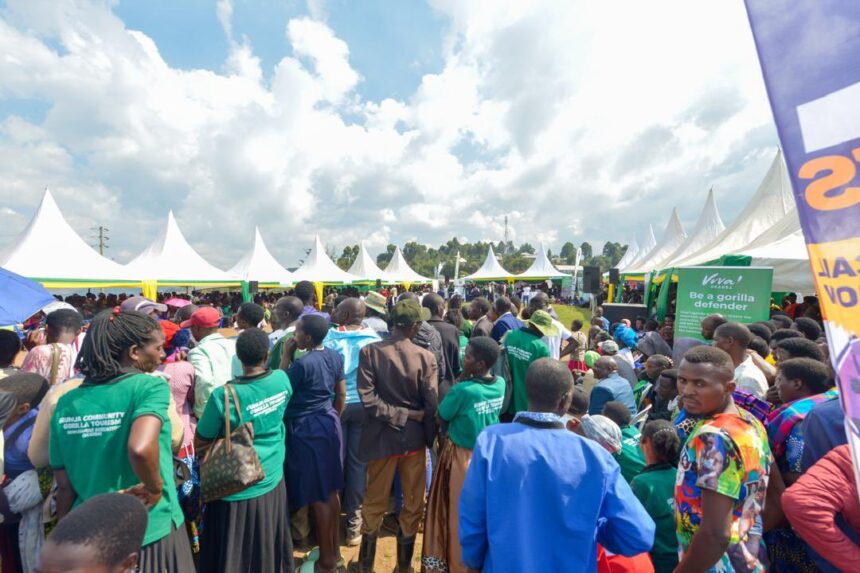
The concerns were raised during celebrations to mark World Gorilla Day held at Ruhija Church of Uganda in Ruhija Town Council.
Ruhija Town Council Mayor Geoffrey Tumuhimbise accused UWA of being unfair to neighbouring communities, saying residents cooperate with conservation authorities but receive limited employment opportunities in return.
Tumuhimbise said communities living near the park continue to face challenges, including crop damage by wildlife, poor road networks and water shortages.
He called on UWA and other responsible authorities to review their recruitment strategy and give greater consideration to communities neighbouring protected areas.
CUE IN TUMUHIMBISE ON UWA
The concerns were also raised by Rubanda District LCV Chairperson Stephen Kasyaba, who said communities surrounding protected areas should receive tangible benefits from conservation.
Kasyaba said UWA collects significant revenue from mountain gorilla tourism, yet communities living alongside the parks continue to feel neglected. He called for revenue sharing to be treated as an investment in communities rather than charity.
Kasyaba said communities need to see tangible benefits from conservation if they are to remain motivated to protect forests and wildlife.
He noted that tourism contributes to the local economy through revenue generation, employment and the growth of businesses supplying goods and services to visitors.
Kasyaba referred to discussions over oil revenue sharing in the Bunyoro sub-region, where communities have called for a five-percent share of oil revenues, saying a similar approach could be considered for communities living alongside protected areas.
He also called for communities surrounding Echuya Forest to benefit from conservation and tourism-related initiatives.
According to Kasyaba, visible public services and development opportunities in communities neighbouring protected areas would strengthen relations between residents and conservation authorities and encourage greater support for conservation.
CUE IN KASYABA
Rubanda District Deputy Chief Administrative Officer Ritah Elizabeth Byiringiro, who said she had been in the office for about two weeks, acknowledged the concerns raised by the community.
However, she commended district leaders, UWA officials and conservation partners for supporting communities living around protected areas.
Byiringiro urged communities neighbouring Bwindi to continue protecting the park and its resources, saying they are among the direct beneficiaries of tourism and conservation activities.
She said community participation is essential in protecting the park for current and future generations.
CUE IN BYIRINGIRO
In response to the concerns, the Minister of Tourism, Wildlife and Antiquities, Col. Tom Butime, represented by the Ministry’s Commissioner for Biodiversity Management, John Magambo, said Bwindi-Mgahinga Conservation Area is a national asset whose opportunities should be shared across Uganda.
Magambo encouraged communities neighbouring the park to seek employment opportunities but also focus on the wider benefits generated by the protected area, including road infrastructure, increased economic activity and indirect income from tourism.
Magambo recalled his experience working in Bwindi in the early 2000s, particularly in Buhoma, Kanungu, when he said people had limited access to vehicles and roads and would sometimes travel on foot to Kabale.
He said the situation has since changed, arguing that the economy of Buhoma has grown significantly and predicting that Ruhija could eventually become more developed than Rubanda Town, while Rubuguri could similarly grow beyond Kisoro Municipality.
Magambo, while responding to Kasyaba’s comments on revenue sharing, said communities have already benefited considerably from the park.
He said mountain gorillas are an important tourism resource that generates revenue for Uganda while creating income-generating opportunities for communities around conservation areas.
Magambo said protecting gorillas and their habitats should be a shared responsibility involving government agencies, conservation organisations, tourism operators and local communities.
He also called for the restoration of indigenous trees and protection of forests, saying healthy forests provide the habitat needed for the survival of mountain gorillas.
He said sustainable gorilla tourism can continue contributing to Uganda’s economy if the animals are protected and tourists follow established tracking guidelines.
CUE IN MAGAMBO