
KAMWENGE UGANDA: Tooro Kingdom has called for stronger community participation in environmental conservation, urging residents of Kamwenge District to abandon activities that threaten wildlife and embrace sustainable livelihood practices.
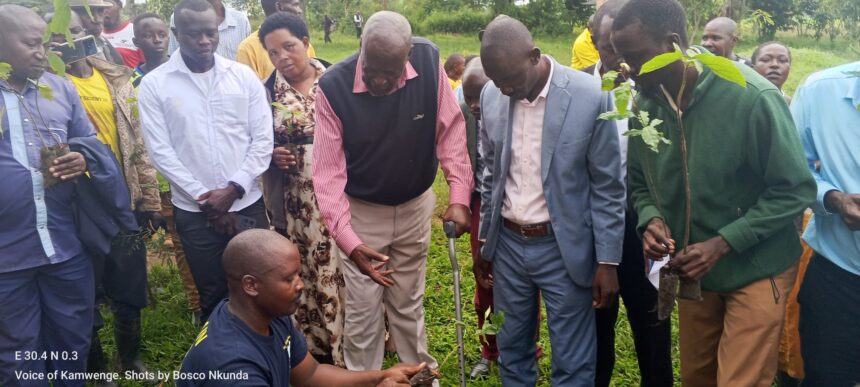
The call was made on Friday by the Omujwera Musuuga of Tooro Kingdom and head of the Babiito royal clan, Charles Kayondo Kamurasi Akiiki, who represented the King of Tooro, Omukama Edward Rukidi Nyabongo I, at the Rain Starts With Us campaign organised by Rwenzori Rain Makers at St. John’s Church of Uganda in Nyamabale, Kiziiba II Village, Kiziiba Parish, Kamwenge Sub-county.

Musuuga said environmental conservation remains a continuous programme within the kingdom, tracing its origins to the reign of the late Omukama Oyo Nyimba Kabamba Iguru Rukidi IV.
He called on kingdom subjects to take personal responsibility for protecting natural resources, particularly by ending practices that bring communities into conflict with wildlife.
He also commended members of the Kiziiba Reformed Poachers Association for abandoning poaching, urging them to pursue alternative livelihood activities to sustain their households.
CUE IN MUSUUGA ON CONSERVATION RR//ENG.
The conservation appeal was reinforced by the Deputy Chief of Kibale County, Bright Tumwine Ammoti, and the County Chief for Fort Portal City, Ernest Kalege Amooti, who urged residents to integrate environmental protection into their agricultural activities through the planting of both food and cash crops.
CUE IN KINGDOM LEADERS RR //
The Director of People and Forest Community Conservation Initiative, Polly Akampurira, identified poaching as the only threat to Kibale National Park, expressing optimism that conservation prospects would improve as more former poachers abandoned illegal hunting activities.
Akampurira, however, emphasised that rehabilitation must be accompanied by economic support, appealing to the government to extend poverty alleviation interventions, including the Parish Development Model (PDM), to help reformed poachers establish alternative sources of income.
She also raised concern over inadequate funding for conservation activities, while acknowledging the contributions of development partners, including United Kingdom-based Films for Change and Kenya-based Docciesphere.
CUE IN POLLY ON REFORMED GROUP RR//ENG.
The campaign also used documentary filmmaking as an environmental awareness tool, featuring a screening of Rwenzori Rain Makers, a conservation film produced by Films for Change in partnership with Kenya-based Docciesphere.
Speaking to thelensreports.co.ug, Films for Change Director Zuleika Kingdon said the production adopted visual storytelling to attract community interest and make environmental conservation messages easier for audiences to understand and retain.
Kingdon, however, identified language differences as a major challenge encountered in communicating the film’s message to the local community.
CUE IN ZULEIKA ENG.
Meanwhile, Isaac Okwiir, a director of Rwenzori Founders, said their presence in Kamwenge was intended to inspire communities to embrace tree planting as a practical response to growing environmental challenges.
He warned that failure to increase tree cover could worsen environmental pressures in the region, pointing to changes involving glaciers on Mount Rwenzori and increasing human-wildlife conflicts as concerns that require collective action.
Docciesphere Impact Producer Elsie Kariuki said the documentary was intended to support the transition of reformed poachers into alternative livelihoods while equipping the wider community with knowledge about environmental conservation.
CUE IN ELSIE ON FILM ENG.
Despite abandoning poaching, representatives of the Kiziiba Reformed Poachers Association, including Muhumuza Jackson and Kalenzi Moses, expressed uncertainty about their future livelihoods.
They appealed to the government to provide proper rehabilitation and practical support to enable them to establish alternative means of survival and remain committed to conservation.
CUE IN EX-POACHERS RR