

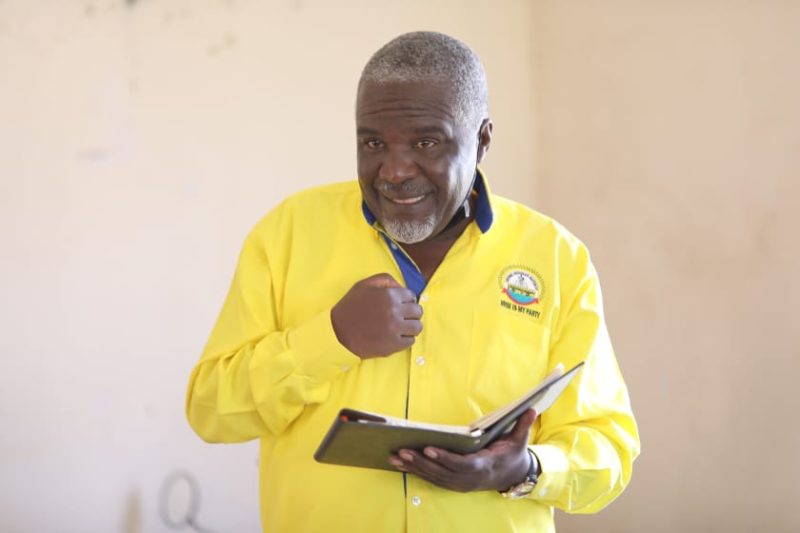
KABALE UGANDA: The High Court in Kabale has upheld the election of Bukimbiri County Member of Parliament Eddie Kwizera Wa-Gahungu after dismissing an election petition filed by Forum for Democratic Change (FDC) candidate James Owebeyi, ruling that he failed to establish the legal standing required to challenge the results.
In a judgment delivered electronically on Monday, October 19, 2026, Justice Lubega Farouq dismissed the petition after finding that Owebeyi had failed to prove that he was a Ugandan citizen at the time of his nomination, a constitutional requirement for eligibility to contest for Parliament.

The court held that Owebeyi had not established that he was a validly nominated parliamentary candidate and, consequently, lacked locus standi—the legal right or capacity to bring the election petition.
The judge further ruled that the court could not proceed to determine the substantive complaints about the conduct of the January 15, 2026 parliamentary elections after finding that the petitioner lacked the legal standing to maintain the case.
Owebeyi had petitioned the court to challenge the election results, arguing that the Electoral Commission unlawfully removed his name from the voters’ register on polling day, preventing him from casting his vote at Nyabaremura Polling Station in Rubuguri Town Council, Kisoro District.
According to the petition, Owebeyi went to the polling station intending to vote but was informed by the presiding officer that his name was missing from the register.
He argued that the removal of his name amounted to non-compliance with electoral laws and substantially affected the election outcome.
The petitioner also claimed that the incident prompted his supporters to abandon the voting process.
However, the court did not determine whether the Electoral Commission unlawfully removed his name or whether the alleged irregularity substantially affected the election results, because the question of his legal standing was decisive.
In resolving the first issue, Justice Lubega relied on Article 80(1) of the Constitution of Uganda and Section 4 of the Parliamentary Elections Act, which require a person seeking election to Parliament to be a Ugandan citizen.
The court also considered Section 79(2) of the Parliamentary Elections Act, which provides that a parliamentary election petition may be filed by a candidate who loses an election or by a registered voter in the constituency supported by the signatures of at least 500 registered voters, in accordance with the law.
Owebeyi argued that he qualified to challenge the results because the Electoral Commission had duly nominated him to contest for Bukimbiri County parliamentary seat on October 23, 2025.
He asked the court to rely on his nomination documents and the election Gazette as evidence that he had been officially cleared to participate in the election.
However, the court had earlier removed the documents from the record after finding that they were uncertified public documents and therefore did not meet the applicable evidential requirements.
This left the petitioner unable to rely on those documents to establish the validity of his nomination.
The judge noted that the burden of proving legal standing rested on the petitioner and that he had not sufficiently addressed the evidence presented by the Electoral Commission concerning his citizenship status.
The Electoral Commission, through its Head of Legal, Eric Sabiti, told the court that verification of Owebeyi’s particulars in records maintained by the National Identification and Registration Authority (NIRA) showed that he was classified as a presumed citizen rather than a person whose Ugandan citizenship had been established in the relevant registration records.
In a supplementary affidavit dated September 10, 2026, Sabiti stated that Owebeyi’s particulars carried the letter “P”, which the Commission interpreted as indicating presumed citizenship.
The Commission argued that Owebeyi had not provided sufficient evidence to establish his Ugandan citizenship, adding that his name was removed from the voters’ register after the discrepancy was identified.
The respondents maintained that citizenship was a mandatory requirement for nomination as a parliamentary candidate and that failure to satisfy that requirement meant Owebeyi could not qualify as a valid candidate for purposes of the petition.
Owebeyi, however, maintained that the Electoral Commission had nominated him after he fulfilled the constitutional requirements for contesting the parliamentary seat.
The court ultimately found that he had failed to produce sufficient evidence to rebut the Commission’s claims about his citizenship status.
In reaching its decision, Justice Lubega relied on previous decisions of the Court of Appeal concerning the legal standing of election petitioners.
The judge cited Hon. Tumuramye Genensio v Tayebwa Herbert Musasizi and Another, in which the Court of Appeal emphasised that an election petitioner bears the responsibility of establishing legal standing and demonstrating compliance with statutory nomination requirements.
The court also relied on Nabadda Ritah v Nantaba Idah Erios, which explained that the question of locus standi concerns a person’s legal capacity to institute proceedings and is distinct from the merits of the case.
According to the judgment, once a court determines that a petitioner lacks legal standing, it cannot proceed to determine the other substantive issues raised in the petition.
Justice Lubega consequently concluded that Owebeyi had failed to prove that he was a Ugandan citizen at the time of his nomination and was therefore not established as a validly nominated candidate for Bukimbiri County.
The judge ruled that Owebeyi lacked the legal standing to challenge the election held on January 15, 2026.
Before addressing the citizenship question, the court considered objections raised by lawyers representing Kwizera over the admissibility of documents attached to Owebeyi’s petition.
The lawyers argued that the documents had not been properly certified and that some of them were public records that could not be relied upon without meeting the requirements of the Evidence Act.
The disputed documents included Owebeyi’s nomination papers, voter location slip, the return form for transmission of results and a copy of the Uganda Gazette.
The court rejected the first objection concerning the marking of documents attached to the supporting affidavit.
Justice Lubega observed that the Commissioner for Oaths who commissioned Owebeyi’s affidavit had also stamped and signed the annexures, which substantially complied with Rule 8 of the Commissioner for Oaths Rules.
However, the judge agreed with the respondents that the documents classified as public records required certification before they could be relied upon as evidence.
The court noted that although the documents had initially been admitted without objection during the scheduling of the case, their admission did not remove the legal requirement for certification.
Justice Lubega consequently expunged the documents marked PEX1 to PEX4 from the court record.
The judge emphasised that election petitions are matters of public importance and that parties challenging election results must strictly comply with established legal and evidential requirements.
According to the results cited in the judgment, Kwizera was declared the winner of the Bukimbiri County parliamentary election with 14,761 votes.
National Resistance Movement (NRM) candidate Turyagyenda Asgario came second with 12,553 votes, while Owebeyi, who contested on the FDC ticket, received 102 votes.
The results were subsequently published in the Uganda Gazette on March 2, 2026.
Owebeyi’s petition sought to challenge the conduct of the election, particularly the alleged removal of his name from the voters’ register on polling day.
However, the court’s decision means that his petition has been dismissed without a determination of whether the alleged voter-register irregularity affected the outcome of the election.
Despite dismissing the petition, Justice Lubega directed that each party bear its own legal costs.
The judge observed that the petition raised a constitutional issue concerning a candidate’s right to vote and involved matters of political and national importance.
The court said the decision on costs was intended to promote harmony and reconciliation despite the unsuccessful petition.